School Branding Blog
Why Brand Guidelines Are the Most Undervalued Asset in School Branding
- Author
- Mash Bonigala · Creative Director
- Published
- March 26, 2026

A school invests $30,000 in a professional rebrand. The new logo is sharp. The color palette is modern. The mascot finally looks like it belongs in 2026 instead of 1996. The launch event goes well. Parents are excited. Staff are proud.
Six months later, the athletics department prints new jerseys using the wrong shade of blue. The PTA newsletter uses a stretched, pixelated version of the logo. A teacher creates a flyer in Canva with three fonts that have nothing to do with the approved typography. The front office prints enrollment packets using the old letterhead because “we still had boxes of it.”
By the end of the first year, the brand that cost $30,000 looks like it cost nothing.
This happens at schools constantly, and it happens for one reason: the school invested in a brand but never invested in brand guidelines. (For the complete rollout strategy that prevents this, see our first 100 days after a rebrand playbook.)
Related: visual identity design | school branding strategy | brand guidelines template
What Brand Guidelines Actually Are (and Are Not)
Brand guidelines are not a PDF that sits in someone’s Google Drive collecting dust. They are the operating manual for how your school’s identity appears across every touchpoint, created by every person, in every context.
Effective school brand guidelines define:
- Logo usage rules: which versions to use, minimum sizes, clear space requirements, and what never to do with the logo
- Color specifications: exact color values (HEX, RGB, CMYK, Pantone) so every printer, screen, and vendor produces the same result
- Typography standards: approved fonts for headings, body text, and digital use, with fallback options
- Mascot usage: approved illustrations, poses, and contexts where the mascot should and should not appear
- Photography style: guidance on image tone, composition, and subject matter
- Voice and tone: how the school sounds in writing, from formal communications to social media
- Application examples: real mockups showing how the brand appears on letterhead, signage, uniforms, websites, and social media
Without these specifications, your brand becomes a suggestion rather than a standard. And suggestions get ignored.
The Cost of Operating Without Guidelines
Brand Drift: The Silent Killer
Brand drift is what happens when dozens of people across your school make independent design decisions without a shared reference point. Each individual choice might seem harmless, but the cumulative effect is devastating.
From our work across 250+ K-12 institutions, schools without enforced brand guidelines tend to experience brand consistency erosion within the first year of a rebrand:
- Logo variations multiply: unofficial versions of the logo start showing up in circulation
- Color accuracy drops: off-brand colors creep into materials
- Typography becomes random: unapproved fonts replace the brand typeface in internally-created documents
- Vendor output varies wildly: printers, sign shops, and apparel vendors produce inconsistent results without spec sheets
The Financial Impact
Brand drift does not just look unprofessional. It directly undermines the enrollment and perception gains that the rebrand was supposed to deliver.
Schools with strong brand consistency tend to see higher enrollment application rates compared to schools with fragmented identities. When guidelines are absent, schools forfeit that advantage within a single academic year.
Consider the math: if your rebrand cost $30,000-$50,000, and brand drift erodes the enrollment gains that justified the investment, you have not just wasted money on the rebrand. You have also lost the revenue those enrollment gains would have generated.
This is one of the hidden costs of brand neglect that school leaders rarely anticipate until it is too late.
The 8 Essential Components of School Brand Guidelines
1. Logo System and Usage Rules
Your logo is your most visible brand asset. Guidelines must cover:
Logo variations: primary logo, secondary/alternate marks, icon-only version, wordmark-only version, and single-color versions for limited-color applications.
Clear space: the minimum empty area around the logo that must remain unobstructed. This is typically measured using an element of the logo itself (such as the height of a letter) to keep proportions consistent at any size.
Minimum size: the smallest dimensions at which the logo can be reproduced before details become illegible. Define separate minimums for print and digital.
Unacceptable uses: show explicit examples of what not to do. Stretch, rotate, recolor, add effects, crop, place on clashing backgrounds. If you do not show people what is wrong, they will invent new ways to break your logo.
See how Boggy Creek Elementary implemented clear logo system guidelines that ensure their manatee mascot reproduces accurately across everything from PE shorts to building signage.
2. Color Palette with Exact Specifications
The psychology of school colors only works when the colors are applied accurately. “Blue and gold” means nothing without numbers.
Your guidelines must include:
- Primary palette: your core 2-3 brand colors with HEX, RGB, CMYK, and Pantone values
- Secondary palette: supporting colors for accents, backgrounds, and digital use
- Color ratios: guidance on how much of each color should appear (e.g., 60% primary, 30% secondary, 10% accent)
- Background rules: which color combinations are approved and which fail accessibility contrast requirements
Why exact values matter: the difference between Pantone 286 and Pantone 300 is the difference between Duke blue and UNC blue. Without specifications, your “school blue” becomes whatever blue each vendor happens to use.
3. Typography System
Typography directly affects how families perceive your school. Your guidelines should define:
- Primary heading font: used for headlines, signage, and high-visibility applications
- Body text font: used for paragraphs, letters, and extended reading
- Digital fallback fonts: web-safe alternatives when brand fonts are unavailable
- Hierarchy rules: sizes, weights, and spacing for H1 through body text
4. Mascot Usage Guidelines
If your school has a mascot, it needs its own section in the guidelines. Mascots are the most frequently misused brand asset in schools because everyone loves them and everyone wants to customize them.
Define:
- Approved illustrations and poses: which artwork is official
- Contexts for use: when to use the full mascot vs. the logo mark
- What is off-limits: no hand-drawn versions, no AI-generated variations, no unofficial costumes or representations
- Costume guidelines: if you have a mascot costume, document approved appearances and behaviors
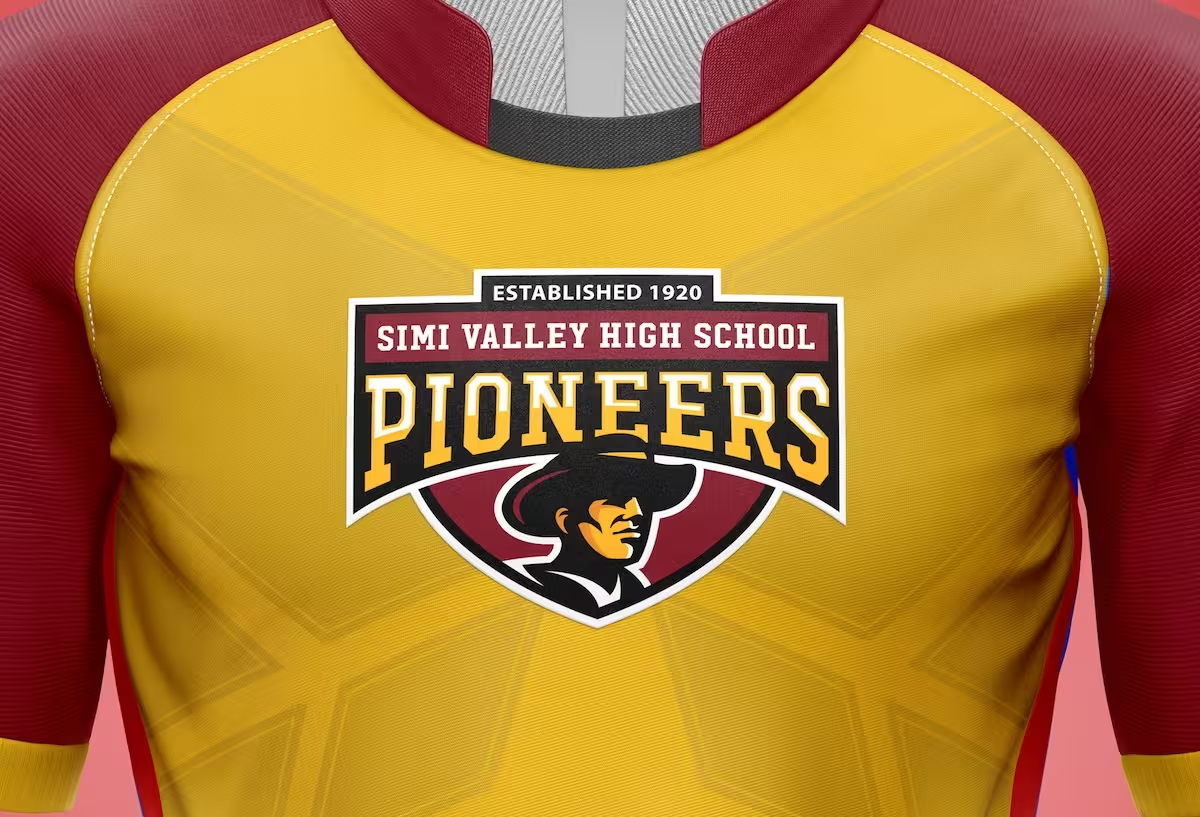
The difference between a mascot that builds brand equity and one that undermines it comes down to control. See how schools like Simi Valley High School and Woodbridge School District maintain mascot consistency across dozens of applications.
5. Photography and Image Standards
Schools generate thousands of photos each year across events, classrooms, athletics, and social media. Without guidance, the visual quality varies enormously.
Guidelines should address:
- Subject matter: types of images that represent the brand well (engaged students, collaborative learning, school pride)
- Composition: preferred framing, lighting, and angles
- Diversity and representation: ensuring imagery reflects the school community
- Technical standards: minimum resolution, file formats, and image treatment (filters, overlays, text)
6. Voice and Tone
Your brand voice is how your school sounds in every written communication. Guidelines should define:
- Core voice attributes: 3-5 adjectives that describe how the school communicates (e.g., warm, confident, community-focused)
- Tone variations: how the voice adapts for different contexts (formal letters vs. social media vs. crisis communication)
- Language to use: approved terminology, taglines, and key messages
- Language to avoid: jargon, cliches, and phrases that do not align with brand positioning
This connects directly to your brand messaging framework, ensuring that everyone from the principal to the social media coordinator speaks with one voice.
7. Digital Application Standards
With digital-first branding now driving the majority of first impressions, guidelines must cover:
- Website standards: how the brand translates to web design
- Social media templates: branded templates for posts, stories, and headers
- Email signatures: standardized format for all staff
- Digital document templates: letterhead, presentations, newsletters
8. Environmental and Signage Standards
Campus signage and environmental branding are high-visibility, high-investment applications that demand precise specifications:
- Exterior signage: dimensions, materials, color matching, illumination
- Interior wayfinding: consistent sign types, mounting heights, and typography
- Athletic facilities: gym floor logos, scoreboard graphics, field signage
- Banners and displays: approved designs for seasonal and permanent installations
How to Build Guidelines That Actually Get Used
The biggest problem with brand guidelines is not creating them. It is getting people to follow them. Most school brand guides fail because they are created for designers and handed to non-designers.
Write for Your Real Audience
Your guidelines will be used by:
- Office staff creating flyers and newsletters
- Teachers making classroom materials
- Coaches ordering uniforms and equipment
- PTA volunteers designing event promotions
- Vendors printing signage and merchandise
None of these people are graphic designers. Write guidelines in plain language. Show visual examples of right and wrong. Make the correct choice easier than the incorrect one.
Provide Ready-to-Use Assets
Guidelines without assets are instructions without tools. Include:
- Logo files in every format (SVG, PNG, EPS, PDF) at multiple sizes
- Color swatches that can be imported into common tools (Canva, PowerPoint, Google Slides)
- Font files with installation instructions
- Templates for the 10 most common documents your school produces
- Social media templates pre-built in Canva or a similar tool
When you hand someone a branded Canva template, they use it. When you hand them a 40-page PDF and tell them to figure it out, they open a blank document and use Comic Sans.
Create a Brand Portal
Store all guidelines, assets, and templates in a single, accessible location. This can be as simple as a shared Google Drive folder or as sophisticated as a dedicated brand portal. The key is that every person in the organization knows where to find brand assets and how to use them.
Appoint a Brand Guardian
Designate one person (or a small team) as the point of contact for brand questions. This person reviews materials before printing, approves vendor proofs, and flags inconsistencies. Without someone actively monitoring, guidelines become optional.
Train Your Team
When you launch new guidelines, hold a 30-minute training session for all staff. Show the most common mistakes and demonstrate how to use the templates. Repeat this training at the start of each school year for new staff members.
Building the Case for Brand Guidelines Investment
If you are working on securing board approval for a rebrand, include brand guidelines as a non-negotiable line item in the budget. Frame it this way:
Without guidelines, the rebrand investment degrades within 12 months and requires another significant investment to correct.
With guidelines, the rebrand investment compounds over time as consistent application builds recognition, trust, and enrollment momentum.
The cost of professional brand guidelines typically adds 15-25% to a rebrand project. The cost of not having them is 100% of your rebrand investment wasted within two years.
For schools that are not yet ready for a full rebrand but want to improve consistency now, our brand guidelines template provides a starting framework. Pair it with a brand audit to identify where your current consistency gaps are most damaging.
The Compound Return of Brand Consistency
Schools that implement and enforce brand guidelines see returns that extend well beyond aesthetics:
- Enrollment inquiry conversion improves because every family touchpoint reinforces the same professional impression
- Teacher recruitment strengthens because candidates encounter a cohesive, confident identity
- Community trust deepens because consistency signals stability and competence
- Vendor costs decrease because clear specifications reduce revisions, reprints, and miscommunication
- Internal pride grows because staff feel part of something polished and intentional
- Spirit wear sales increase because professionally designed merchandise is more appealing
The schools in our portfolio that invest in comprehensive guidelines consistently outperform those that treat guidelines as optional. The brand becomes a self-reinforcing system: consistency builds recognition, recognition builds trust, trust builds enrollment, and enrollment funds further brand investment.
Your brand is only as strong as its weakest application. Guidelines ensure there are no weak applications.
Next Steps
- Download our template with the school brand guidelines template
- Audit your current consistency using the 15-point brand audit checklist
- Explore our portfolio of 250+ school branding projects with professional guidelines
- Learn about services: visual identity design | school branding strategy | mascot logo design
Related Resources: Brand Consistency and Enrollment Impact | School Visual Identity Systems | Brand Strategy 101 | School Branding Cost and Pricing Guide | The Hidden Cost of an Outdated School Brand | Brand Refresh vs. Rebrand Decision Guide
We Build and Manufacture Mascot Costumes
A professionally built mascot costume creates unforgettable moments at games, rallies, and community events.

See Full Details →
Design to Delivery
We manage everything
6-12 Week Delivery
In time for your season
Safety First
Ventilation & visibility
Custom Projects
Professional quality
School Visual Identity Design
Unify your school's look across every touchpoint
Comprehensive visual identity systems - logos, colors, typography, and guidelines - that elevate your school's brand and unify every touchpoint.
Get Identity Pricing →Related
School Visual Identity Design
Comprehensive visual identity systems - logos, colors, typography, and guidelines - that elevate your school's brand and unify every touchpoint.
View detailsRelated
Charter Application Branding - Professional Identity for Authorizer Approval
Professional charter application branding that demonstrates operational readiness to authorizers. Complete brand identity, website, and application materials. Charter-specific packages for charter schools.
View details