School Branding Blog
Two Schools Under One Roof: How to Unify Athletic and Academic Branding Into a Single Identity
- Author
- Mash Bonigala · Creative Director
- Published
- April 17, 2026
Walk into almost any school in America and you will find two brands living under the same roof.
The first brand is the athletic identity. It lives on helmets, jerseys, gym floors, and stadium banners. It has a mascot illustration, bold colors, and aggressive typography. It was probably designed by someone who understands sports branding, and it looks strong.
The second brand is the institutional identity. It lives on the website, letterhead, enrollment materials, and the sign out front. It has a different logo, different typography, and sometimes even slightly different colors. It was probably designed by a committee or assembled from templates, and it looks institutional.
These two identities share a school name and an approximate color palette, and that is where the connection ends.
This is the athletic-academic branding gap, and it is one of the most common and most costly brand problems in K-12 education. Schools spend money on both identities, maintain both systems, and produce materials for both audiences, all while undermining the brand consistency that drives enrollment, community trust, and institutional pride.
Related: visual identity design | mascot logo design | school branding strategy
How the Gap Happens
The Historical Origin
The athletic-academic split did not happen by accident. It developed over decades through a predictable sequence:
- The school was founded with a simple institutional identity (name, seal, basic logo)
- Years later, a booster club or athletic director commissioned a separate mascot logo for sports
- The sports identity was designed without reference to the institutional identity
- Over time, both identities evolved independently, each maintained by different people with different goals
- Eventually the school has two complete brand systems with no shared design language
This is the norm, not the exception. We see it in the majority of the 250+ schools we have worked with.
Why It Persists
Schools allow the gap to persist for three reasons:
Nobody owns the whole brand. Athletics owns the sports identity. Administration owns the institutional identity. No single person is responsible for ensuring they work together. This is a governance problem that brand guidelines are designed to solve.
Different audiences, different instincts. Athletic branding gravitates toward energy, aggression, and competition. Institutional branding gravitates toward trust, tradition, and professionalism. Schools assume these cannot coexist in one system.
Vendor fragmentation. The company that printed the jerseys has different files than the company that built the website, which has different files than the company that made the signage. Without a unified asset system, divergence is inevitable.
The Cost of Running Two Brands
Enrollment Confusion
A prospective family visits your website and sees a polished institutional logo. They attend a game and see a completely different athletic identity. They look at the entrance signage and see a third variation. Each inconsistency forces the family to ask: “Which one is the real school?”
Brand consistency drives enrollment. Every mismatch between your athletic and academic identities erodes the trust you are trying to build.
Wasted Budget
Running two brand systems means maintaining two sets of files, two sets of templates, two vendor relationships, and two approval processes. Schools that unify their identities typically reduce brand-related spending simply by eliminating duplicate production.
Weakened Pride
Students wear the athletic brand. They identify with the mascot. But when they walk past the main entrance, the sign shows a different identity. The disconnect tells students that the school does not have its act together, which undermines the sense of belonging that branding is supposed to create.
Missed Merchandise Revenue
Unified brands sell more spirit wear. When the mascot on the hoodie matches the mascot on the letterhead matches the mascot on the website, families have one clear identity to rally around. When multiple identities compete, purchase intent fragments.
The Unified Identity System: How It Works
A unified identity system does not mean using the same logo for everything. It means building a family of marks that share design DNA and work together across every context.
The Mark Family Structure
A professional unified system includes:
Primary mark: the complete logo with mascot, school name, and any supporting elements. This is the anchor identity used on the website, main entrance signage, and official communications.
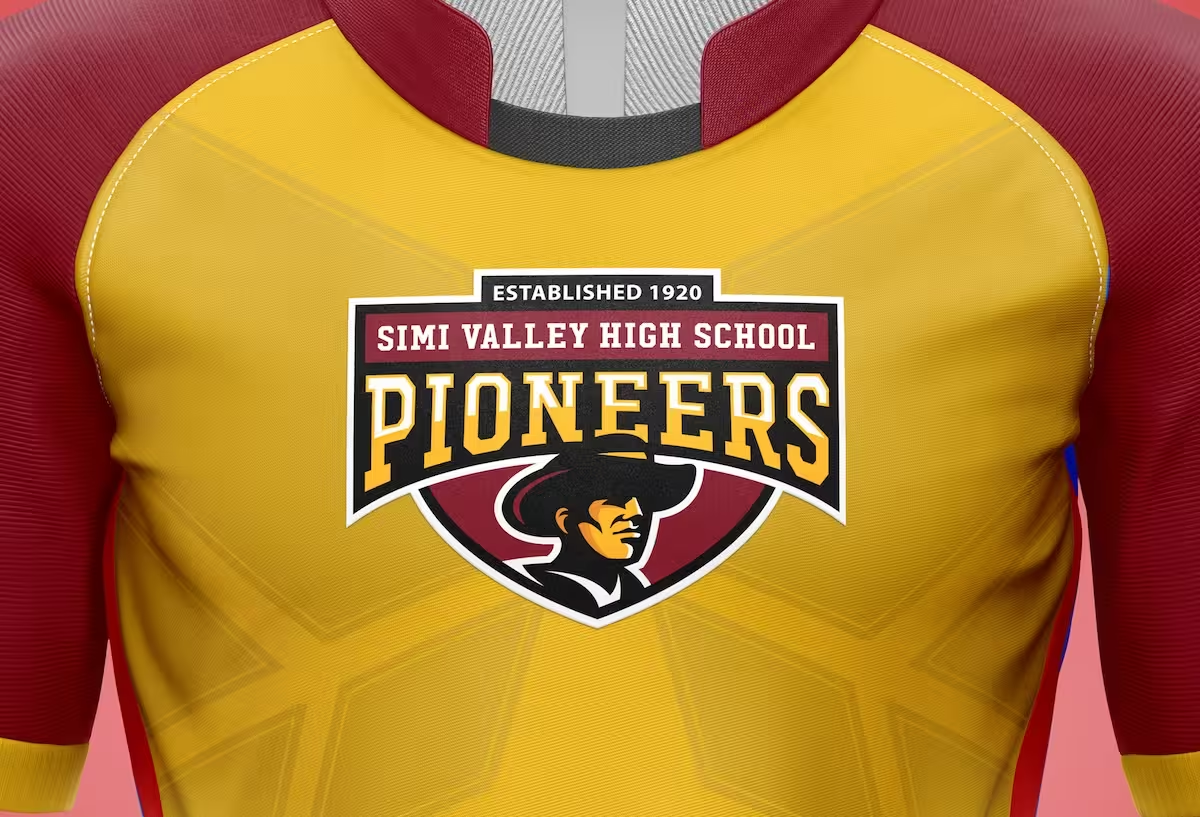
Athletic mark: a more energetic, compact version optimized for helmets, jerseys, and scoreboards. It shares the same mascot illustration, same colors, and same typography family as the primary mark, but it is formatted for athletic contexts.
Academic mark: a formal, restrained version for diplomas, letterhead, board presentations, and formal communications. It may use a simplified mascot or a monogram, but it clearly belongs to the same system.
Icon mark: a standalone mascot head or symbol that works at very small sizes: favicon, social media profile, embroidery on small items.
Wordmark: the school name set in the approved brand typography, without any mascot or graphic element. For contexts where simplicity is needed.
Every mark in the family shares:
- The same color palette with identical specifications
- The same typography system or font family
- The same mascot illustration style, even if scale and complexity vary
- The same proportions, spacing principles, and visual weight
When a family sees the athletic mark on a jersey and then sees the primary mark on the website, the connection is immediate and intuitive. They are obviously the same school, even though the specific marks are different.
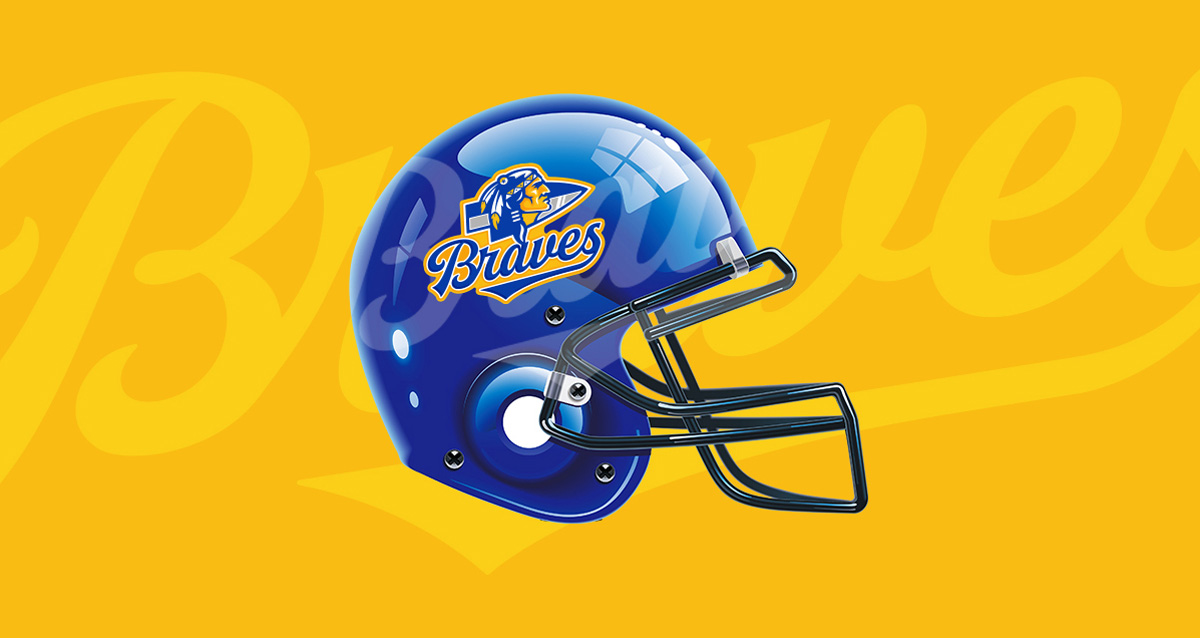
See how Braves High School built a unified identity system where every application, from embroidered jerseys to hoodies to helmet decals, shares the same design language.
Color Unification
Color is where the athletic-academic gap is most visible. Athletics uses “the dark version” of the school colors. The website uses “the light version.” Merchandise uses whatever the vendor had on file. Signage uses whatever matched the building paint.
A unified system locks in exact color values:
- Primary color: one precise value (Pantone, CMYK, RGB, HEX) used consistently everywhere
- Secondary color: one precise value, same principle
- Athletic accent: a high-energy accent color approved for use on sports materials only, but specified alongside the core palette so it complements rather than contradicts
This is the same color governance approach documented in our school colors psychology guide and enforced through brand guidelines.
Typography Unification
Athletics typography tends to be bold, condensed, and aggressive. Academic typography tends to be clean, traditional, and readable. These do not have to be the same font, but they do have to be from the same family or a deliberately paired system.
A unified approach selects:
- Display font: used for athletic marks, event signage, and high-impact headers
- Body font: used for academic documents, website text, and formal communications
- Both from the same font family or a documented pairing so they feel intentionally connected rather than randomly assembled
Typography psychology research shows that font consistency affects perceived institutional competence, which directly influences parent enrollment decisions.
The Process: From Fragmented to Unified
Phase 1: Audit and Map
Start by documenting everything that currently exists. Use the 15-point brand audit checklist with specific attention to:
- Every version of the logo currently in use (athletic, academic, variations)
- Every color value being used across different materials and vendors
- Every font appearing in official and unofficial materials
- The full inventory of mascot artwork (how many versions exist?)
- Where each version appears (jerseys, website, signage, letterhead, social media)
Most schools discover they have many unofficial logo variations in circulation. That audit inventory is the starting point for unification.
Phase 2: Define the Mark Family
Working with a professional school branding agency, design the unified mark family. This is not about starting from scratch. It is about taking the strongest elements of the existing athletic and academic identities and rebuilding them into a coherent system.
The most common approach:
- Keep the mascot character but redraw it at professional quality so it works across all contexts
- Keep the school colors but lock in exact values
- Select one typography system that serves both athletic and academic needs
- Create the full mark family (primary, athletic, academic, icon, wordmark)
- Document everything in comprehensive brand guidelines
Phase 3: Align Stakeholders
Unifying athletic and academic branding requires buy-in from both sides. Athletics directors, coaches, and boosters have deep emotional attachment to “their” marks. Administrators have attachment to “their” institutional identity.
The key message: nobody is losing their identity. Everyone is gaining a system. The mascot stays. The colors stay. The name stays. What changes is that everything now works together and looks like it belongs to the same institution.
This alignment challenge is identical to navigating alumni resistance. The same emotional playbook applies.
Phase 4: Rollout Priorities
Unification does not happen overnight. Prioritize based on visibility and budget:
Immediate (Month 1-2):
- Website and social media (free to update)
- Digital templates and email signatures
- Brand guidelines distributed to all staff and vendors
Short-term (Month 2-6):
- Campus signage at main entrance and high-traffic areas
- Enrollment and marketing materials
- Athletic game-day signage and banners
Medium-term (Month 6-18):
- Uniform replacement as existing inventory cycles out
- Facility updates (gym floor, field signage, scoreboard)
- Spirit wear transition to unified designs
- Vehicle graphics and environmental branding
Use the first 100 days framework to sequence high-impact touchpoints and the enrollment calendar to time the rollout for maximum enrollment effect.
District-Level Unification
For multi-school districts, the athletic-academic gap multiplies across every campus. A district that has 15 schools with 15 separate athletic identities and one weak district mark has 16 brands competing for attention.
District branding solves this by creating a tiered system:
- District mark: consistent across all campuses
- Campus marks: unique to each school but built from the same design system
- Athletic marks: campus-specific but sharing structural and stylistic DNA with the district system
Districts like Woodbridge School District and Republic School District have implemented this approach, creating unified district identities while preserving the individual pride of each campus.
The Financial Case for Unification
When preparing a board presentation for a brand unification project, the financial argument is straightforward:
You are already paying for two brands. You are paying for two sets of vendor files, two design processes, two approval workflows, and two sets of inconsistent materials. Unification does not add cost. It consolidates it.
Consistency pays measurable returns. Schools with unified identities tend to see higher enrollment inquiry rates compared to schools with fragmented identities. That enrollment lift justifies the investment many times over.
Vendor costs decrease. When every vendor receives the same spec sheet, revisions drop, reprints decrease, and turnaround time improves. The brand guidelines pay for themselves in reduced vendor headaches within the first year.
Use our branding cost guide for specific budget ranges and the ROI calculator to project returns.
The Result: One School, One Identity
When a school unifies its athletic and academic branding, something shifts. Students wearing spirit wear in the hallway feel connected to the logo on the website. The sign out front matches the banner in the gym. The enrollment brochure matches the jersey. The social media feed looks like one school, not two.
That coherence is not aesthetic polish. It is functional infrastructure that builds trust, pride, and recognition every single day.
Schools that make this investment stop asking, “Which logo do we use for this?” They stop explaining to vendors which version is current. They stop producing materials that accidentally use the old athletic mark with the new institutional colors. They stop running two brands and start running one.
A school with one identity is a school that communicates one message. And one clear message is worth more than a dozen fragmented ones.
Next Steps
- Audit your current identities using the 15-point brand audit checklist
- See unified systems in our portfolio of 250+ school branding projects
- Plan your budget with the school branding cost and pricing guide
- Learn about services: visual identity design | mascot logo design | school branding strategy
Related Resources: Athletic Program Branding | Brand Consistency and Enrollment Impact | Visual Identity Systems Guide | School Colors Psychology | District Branding: Unifying Multiple Schools | Why Brand Guidelines Protect Your Investment
We Build and Manufacture Mascot Costumes
A professionally built mascot costume creates unforgettable moments at games, rallies, and community events.

See Full Details →
Design to Delivery
We manage everything
6-12 Week Delivery
In time for your season
Safety First
Ventilation & visibility
Custom Projects
Professional quality
School Visual Identity Design
Unify your school's look across every touchpoint
Comprehensive visual identity systems - logos, colors, typography, and guidelines - that elevate your school's brand and unify every touchpoint.
Get Identity Pricing →Related
School Visual Identity Design
Comprehensive visual identity systems - logos, colors, typography, and guidelines - that elevate your school's brand and unify every touchpoint.
View detailsRelated
Charter Application Branding - Professional Identity for Authorizer Approval
Professional charter application branding that demonstrates operational readiness to authorizers. Complete brand identity, website, and application materials. Charter-specific packages for charter schools.
View details