School Branding Blog
School Branding and Student Belonging: How Visual Identity Shapes the Student Experience
- Author
- Mash Bonigala · Creative Director
- Published
- April 7, 2026

Most conversations about school branding focus on what happens outside the building. How does the brand affect enrollment? How do parents perceive it? How does it compare to competitors?
These matter. But they miss the most powerful thing school branding does: change the daily experience of students who are already there.
A strong brand creates a sense of identity and collective purpose that shapes how students feel about showing up every morning. That feeling, more than any academic program or facility upgrade, determines whether students engage, persist, and thrive. Belonging is the strongest predictor of student engagement, and brand is the most visible, tangible way schools create it.
Related: school branding strategy | visual identity design | mascot logo design
The belonging problem
Student disengagement has accelerated since 2020. Chronic absenteeism has roughly doubled. Fewer than half of students report feeling a strong sense of belonging at their school. Students who report low belonging are far more likely to disengage academically and far more likely to transfer. Schools with high belonging scores retain students at dramatically higher rates year over year.
Every student who leaves because they don’t feel connected is lost per-pupil revenue, weakened programs, and diminished community.
Belonging isn’t created by a single program or initiative. It’s built through thousands of daily signals that tell a student: you are part of something. This place has an identity, and you share in it.
Brand is the infrastructure that delivers those signals. When a student walks through a campus with cohesive signage, wears a hoodie with a professionally designed mascot, sees their school colors on the gym floor and the hallway banners and the website, and hears staff use consistent language about the mission, they absorb a message: this is a real place with a real identity, and I’m part of it.
When those signals are absent or inconsistent, the message is different: this is just a building where classes happen.
5 ways brand creates belonging
1. Shared symbols
Humans form group identity around shared symbols. Flags, uniforms, team colors, mascots. These aren’t decorative. They’re psychological anchors.
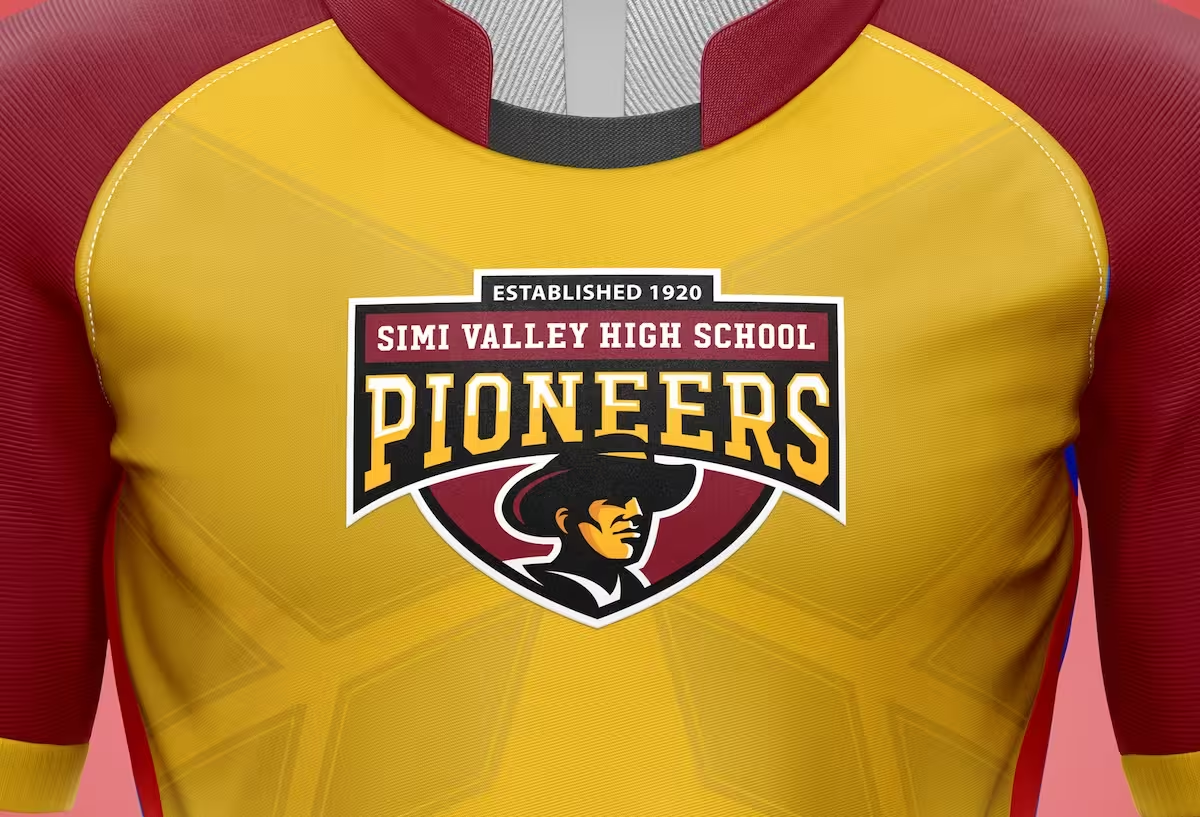
A school mascot is the most powerful belonging symbol a school has. When students say “I’m a Wildcat” or “we’re the Pioneers,” they aren’t describing the school. They’re describing themselves. The mascot becomes part of their personal identity, connecting them to every other student, alumnus, and community member who shares it.
This only works when the mascot inspires genuine pride. A clip-art mascot from 1997 doesn’t create identification. A professionally designed one with real character and visual quality does. Willsboro Central School transitioned from outdated warrior imagery to a modern wolf identity, and the shift in student pride was visible immediately.
2. The physical environment
Students spend 7 to 8 hours a day in school buildings. The visual environment of those buildings communicates whether the institution values identity and pride.
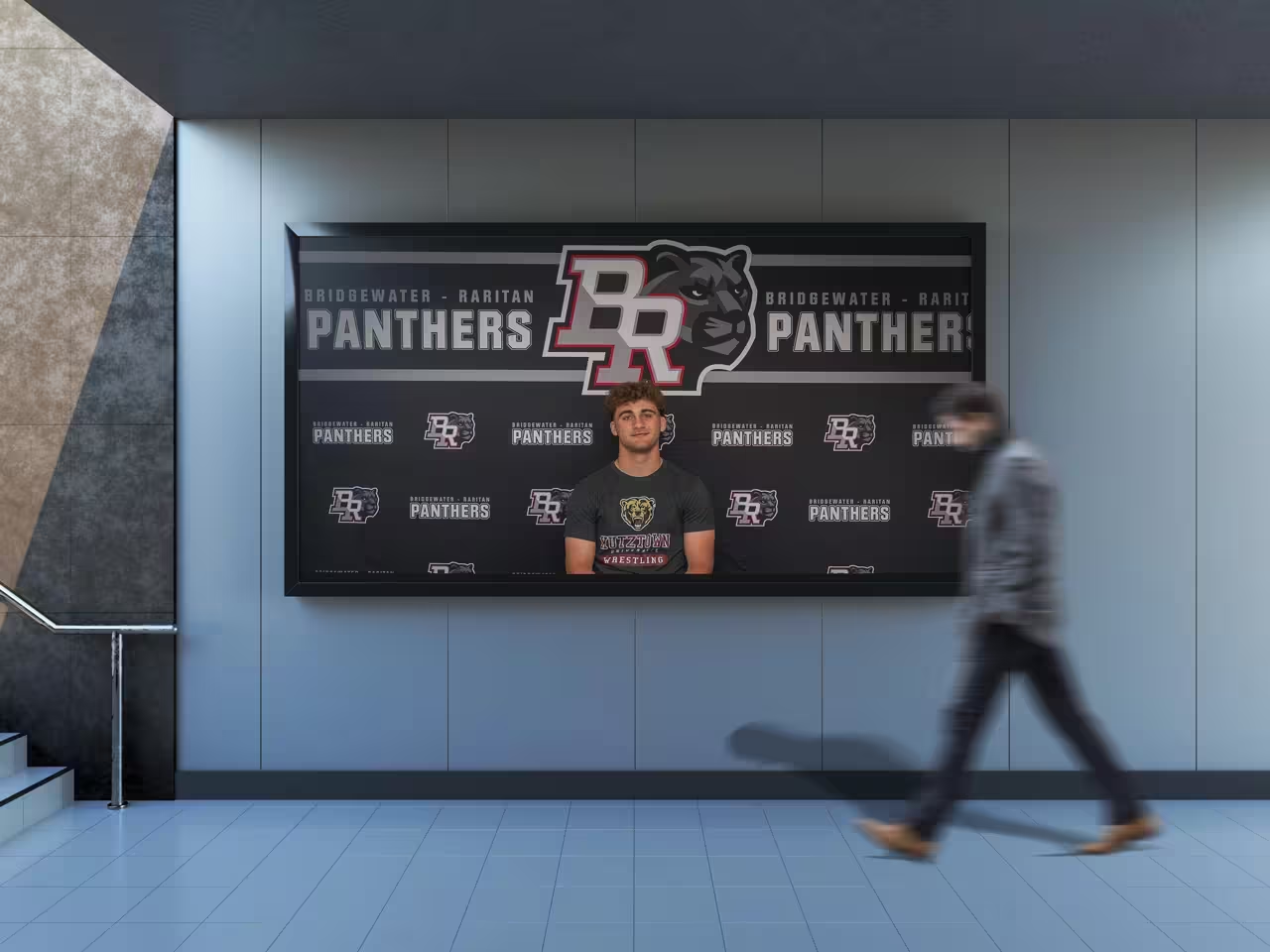
A campus with consistent wayfinding, branded murals and banners in common areas, mascot presence in the gym, cafeteria, library, and entrance, student work displayed alongside brand elements, and well-maintained facilities tells students: someone cares about this place. Bare cinder block walls, inconsistent signage, makeshift decorations, and deferred maintenance tell them the opposite.
The difference isn’t about budget. A branding project on a budget can transform a campus with strategic signage, painted murals, and vinyl applications. Intentionality matters more than expense.
3. Spirit wear
Spirit wear is the most personal expression of school belonging. When a student chooses to wear school gear outside of school, they’re making a public identity statement.
The psychology is simple: wearing branded apparel influences how the wearer feels about the group it represents. A student in a sharp, modern school hoodie feels more connected than a student in a generic tee with a faded logo.
What drives adoption: the design has to be good enough that students would wear it even without the school affiliation. Merchandise should reflect student trends, not adult preferences. Multiple price points matter. Limited-edition drops create excitement. Schools that invest in mascot design quality see spirit wear adoption multiply compared to schools with outdated artwork. Students won’t wear something that embarrasses them.
4. Digital identity
Students live online. Their school’s digital presence is as much a part of their identity environment as the physical campus.
When a school has a modern website and active social media, students share it. They tag the school. They repost content. They use branded filters and frames. Each action reinforces belonging through public identity affirmation.
When the digital presence is outdated or nonexistent, students distance themselves from it. They don’t share. They don’t tag. The school becomes something that happens to them rather than something they’re part of.
5. The school’s story
Belonging deepens when students understand the story of their school: its history, values, and aspirations. Brand provides the framework for that story.
A school with a clear messaging framework and defined voice tells a consistent story across assemblies, newsletters, social media, and daily interactions. Students internalize it and start seeing themselves as part of it. Storytelling in school branding isn’t a marketing technique. It’s a belonging technique. When students hear “we are Trailblazers, and Trailblazers never quit,” they’re receiving a narrative identity that shapes behavior.
The flywheel
Student belonging creates a self-reinforcing cycle. Brand creates belonging. Belonging improves retention (students who feel they belong stay enrolled). Retained students become advocates (they wear the gear, post on social, bring friends to events, become the most authentic enrollment engine a school can have). Advocacy drives enrollment (families choosing schools are heavily influenced by what current students say and do). Enrollment funds further brand investment.
This flywheel is the compound return most leaders miss. It doesn’t start with external marketing. It starts with making current students feel like they belong.
What to do
Start with the mascot. If students don’t voluntarily use the mascot name to describe themselves, don’t wear the merchandise outside of school, and don’t see the mascot as professional enough to be proud of, a redesign should be the first priority. Use the mascot psychology guide to make sure the redesign is strategically grounded.
Walk through your campus with fresh eyes. What message does the environment send? Prioritize: main entrance and lobby (first and last impression daily), gym and athletic facilities (highest emotional connection), cafeteria and common areas (where social identity is most visible), hallways (repetitive daily exposure), exterior signage (community-facing identity). Our environmental branding guide covers the specifics.
Redesign spirit wear for students, not adults. Most school merchandise is designed by adults for adults, and the result is that students won’t wear it. Involve students in the design process. Survey current trends. Offer the styles they actually want: hoodies, joggers, beanies, stickers, phone cases. Make the brand something students choose.
Build digital identity infrastructure. Create branded social media templates that student organizations can use. Develop content students want to share. Make the digital brand something students participate in, not something administered at them.
Tell the story every day. Morning announcements, hallway displays, social media, school events. Connect student achievements to the school identity. Make the brand a living vocabulary students use with each other.
The investment case
For leaders preparing a board presentation, the belonging argument adds something enrollment data alone doesn’t capture.
Retention is cheaper than recruitment. If improved belonging retains 10 additional students per year, the revenue impact in per-pupil funding far exceeds the brand investment. Belonging reduces behavioral costs: schools with high belonging scores report fewer disciplinary incidents, lower counseling demand, and reduced administrative burden. Belonging improves academic outcomes, which improves ratings, which drives enrollment, which funds further investment. The flywheel again.
Boards that think about branding only as external marketing miss the bigger picture. The most valuable audience for your brand is already sitting in your classrooms.
Where to start
More on this topic: The Role of a School Mascot | Spirit Wear as Marketing | Mascot Design Psychology | Turn Current Families Into Your Enrollment Engine | School Branding That Drives Enrollment Growth
We Build and Manufacture Mascot Costumes
A professionally built mascot costume creates unforgettable moments at games, rallies, and community events.

See Full Details →
Design to Delivery
We manage everything
6-12 Week Delivery
In time for your season
Safety First
Ventilation & visibility
Custom Projects
Professional quality
School Visual Identity Design
Unify your school's look across every touchpoint
Comprehensive visual identity systems - logos, colors, typography, and guidelines - that elevate your school's brand and unify every touchpoint.
Get Identity Pricing →Related
School Visual Identity Design
Comprehensive visual identity systems - logos, colors, typography, and guidelines - that elevate your school's brand and unify every touchpoint.
View detailsRelated
Charter Application Branding - Professional Identity for Authorizer Approval
Professional charter application branding that demonstrates operational readiness to authorizers. Complete brand identity, website, and application materials. Charter-specific packages for charter schools.
View details