School Branding Blog
Alumni as Brand Ambassadors: How Graduates Become Your School's Most Powerful Enrollment Tool
- Author
- Mash Bonigala · Creative Director
- Published
- March 21, 2026
- Read
- 11 min

Alumni as Brand Ambassadors: How Graduates Become Your School’s Most Powerful Enrollment Tool
Your best marketing asset is not your website. It’s not your social media presence. It’s not your enrollment brochure. It’s a 22-year-old graduate who tells a coworker, “That school changed my life. You should look into it for your kid.”
That single conversation carries more weight than a year of digital advertising. Why? Because alumni are living proof. They walked your hallways, sat in your classrooms, wore your colors. When they speak about your school, they speak with a credibility that no marketing budget can manufacture.
Yet most schools treat alumni like a closed chapter. Graduation happens, the yearbook ships, and the relationship ends. There’s no system. No strategy. No ongoing connection. The most powerful brand advocates a school could ever have walk off the stage and into silence.
That’s not just a missed opportunity. It’s a strategic failure.
From our work across 250+ K-12 branding and enrollment projects, schools that build intentional alumni engagement programs see a meaningful share of new enrollments directly influenced by alumni connections. And the cost of alumni-driven enrollment? A fraction of paid advertising.
Related: school branding that drives enrollment • brand consistency and enrollment impact • school marketing plan template • how school branding influences parent choice
Why Alumni Are Your Highest-Trust Marketing Channel
Every school competes for attention. Billboards, social media ads, direct mail, digital campaigns. Families see all of it, and most of it blurs together. But a recommendation from someone who actually attended the school? That cuts through.
The trust hierarchy in school enrollment decisions:
- Personal referral from someone who attended the school (highest trust)
- Referral from a current parent
- Online reviews and testimonials
- School website and owned content
- Third-party media and rankings
- Paid advertising (lowest trust)
Alumni sit at the top of this hierarchy because they answer the question parents care about most: “What kind of person does this school produce?” Test scores tell a partial story. Facilities tell another. But an alumni who is thriving in college, building a career, serving their community? That’s the complete answer.
The data supports this:
- Word-of-mouth referrals convert at much higher rates than paid advertising
- Most parents say personal recommendations are among the most influential factors after campus visits
- Alumni-connected families have higher retention rates and stronger community engagement from day one
Alumni are one half of the advocacy equation. For the other half, learn how current families become your most powerful enrollment engine when your brand gives them the right tools. And when a rebrand is on the table, the emotional playbook for alumni resistance shows how to turn potential opposition into advocacy.
- Schools with visible alumni success stories report higher inquiry-to-tour conversion rates
The Alumni Brand Ambassador Framework
Building an alumni program isn’t about throwing a reunion every five years and hoping nostalgia does the work. It’s about designing a system that keeps graduates connected, proud, and actively engaged with your school’s brand.
Here’s the framework we recommend:
Layer 1: Stay Connected (Passive Engagement)
Before alumni can advocate for your school, they need to feel like they still belong to it. Most schools lose this connection within 12 months of graduation.
Build the infrastructure:
- Alumni email list. Capture personal email addresses before graduation (not school-issued accounts that expire). Send a quarterly newsletter that celebrates alumni achievements, shares school updates, and reinforces pride. Keep it short, visual, and brand-consistent.
- Social media community. Create a dedicated alumni group or channel. Facebook Groups still work well for older alumni. Instagram and TikTok reach younger graduates. The key: let alumni drive the conversation. Post prompts like “Where are you now?” and “What’s your favorite memory?” and let the community build itself.
- Alumni directory. A simple, opt-in directory that lets graduates find and reconnect with classmates. This creates ongoing value that keeps alumni checking back.
What to communicate:
- Student and school achievements (current wins remind alumni why they’re proud)
- Campus updates (new facilities, programs, milestones)
- Alumni spotlights (celebrating what graduates are doing now)
- Event invitations (homecoming, reunions, mentorship opportunities)
What not to communicate:
- Donation asks in every message (the fastest way to lose alumni engagement)
- Generic institutional updates that read like board reports
- Anything that sounds like you only reach out when you want something
Related: school email marketing for enrollment • school social media strategy • school brand voice guide
Layer 2: Build Pride (Active Engagement)
Once alumni are connected, give them reasons to be visibly proud. This is where your visual brand identity does heavy lifting.
Branded merchandise that alumni actually want.
Most school spirit wear targets current students. Alumni merchandise should feel elevated. Think premium materials, clean logo applications, and designs that work in adult contexts. A well-designed hoodie with your school mascot becomes a walking billboard at a coffee shop, a gym, a college campus.
The best alumni merchandise programs:
- Offer items that feel premium, not promotional
- Feature the mascot mark or logo lockup in clean, sophisticated applications
- Include options that work in professional settings (subtle logo polos, laptop stickers, quality accessories)
- Are available year-round through an online store, not just at homecoming
Events that reinforce belonging.
Homecoming is obvious. But the schools that excel at alumni engagement create touchpoints beyond the annual tradition:
- Milestone reunions (5, 10, 15, 20 years) with branded experiences
- Career panels where alumni speak to current students (gives graduates a purpose beyond nostalgia)
- Athletic alumni games that bring former players back to campus
- Graduation attendance invitations so alumni can watch the next generation walk the stage they once crossed
Every event should be visually consistent with your current brand. If your school refreshed its identity since an alumni class graduated, use the event as a chance to reintroduce the updated brand. Alumni should leave feeling like the school they love has grown, not changed beyond recognition.
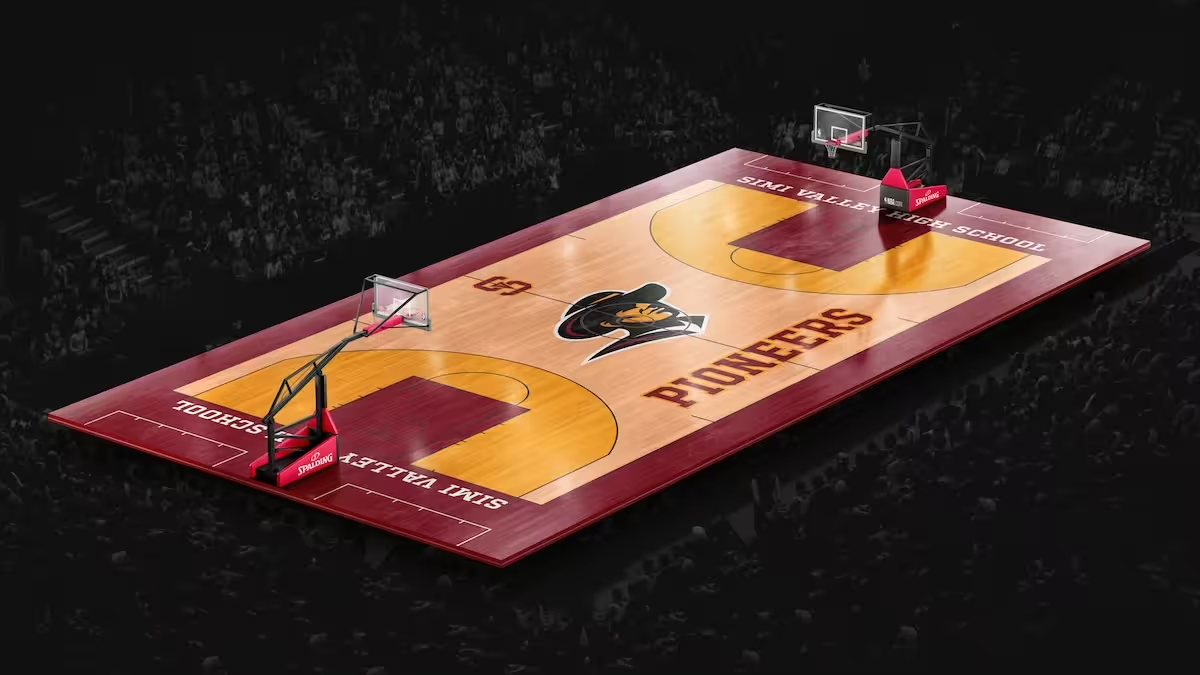
Real-world proof
Schools with Brand Systems That Build Lasting Pride

Layer 3: Activate Advocacy (Strategic Engagement)
This is where alumni engagement becomes an enrollment strategy. Connected, proud alumni are ready to advocate. You just need to make it easy.
The Alumni Ambassador Toolkit
Create a digital toolkit that alumni can access and share:
- Social media graphics with your school’s brand identity that alumni can post on their own channels. “Proud [School Name] alum” frames, story templates, and shareable graphics for key moments (back-to-school, graduation, spirit weeks).
- Talking points for when someone asks, “Where did you go to school?” Not scripts, but genuine conversation starters: key programs, recent achievements, what makes the school different. Alumni want to brag. Give them the material.
- Referral cards or links. A branded card (physical or digital) that alumni can hand to families considering the school. Include a QR code that links to a landing page built specifically for alumni-referred families. Track referrals. Recognize them.
- Testimonial templates. Make it simple for alumni to write Google reviews, provide video testimonials, or share their stories. A guided prompt (“What did [School Name] prepare you for?”) produces better content than an open-ended request.
Structured referral programs.
Formalize what happens informally. When an alumni refers a family:
- The family receives a personalized welcome that acknowledges the connection (“You were referred by [Alumni Name], Class of 2018”)
- The alumni receives a thank-you message and recognition
- If the family enrolls, both the family and the alumni are celebrated
This isn’t a transaction. It’s community. The referred family starts their journey already connected to someone who loves the school. The alumni feels valued as more than a name in a database.
Alumni Engagement by School Level
High Schools: The Natural Fit
High school alumni have the strongest emotional connections. Four years of identity formation, athletics, friendships, and milestones create deep loyalty. High schools should:
- Launch ambassador programs starting with recent graduates (Classes of the last 5 years) who are most active on social media
- Create a “Class Rep” system where one graduate per class serves as the point of contact
- Feature alumni in open house and campus visit events as living proof of outcomes
- Build an alumni wall (physical or digital) that celebrates graduates’ post-secondary achievements
The athletic connection is particularly powerful. Former athletes who return for games, coach youth leagues, or speak at banquets become visible ambassadors. Their presence says, “This school built something in me that I want to give back.”
Related: high school branding guide • spirit wear as marketing • role of mascot logos in branding
Middle Schools: The Transition Bridge
Middle school alumni engagement is about maintaining connection during the transition to high school. This matters most when your middle school feeds into multiple high schools, or when you want families to stay within your district or network.
Focus on:
- “Where are they now?” features that spotlight former students thriving in high school
- Transition mentorship programs where 9th graders mentor 8th graders
- Invitations to return for special events (science fairs, performances, field days)
- Parent-centered engagement, since middle school alumni are still minors
Related: middle school branding guide
Elementary Schools: The Family Network
Elementary school “alumni” programs are really family alumni programs. The parents are the ambassadors, and they remain in the community long after their children move on.
What works:
- Feature alumni families in enrollment marketing (“The Johnsons started here in 2015. Now their third child is in second grade.”)
- Invite former students back for read-aloud days or classroom visits
- Maintain a parent alumni network that connects experienced families with new ones
- Celebrate the journey by tracking where elementary alumni end up in middle and high school
Elementary alumni engagement has a unique advantage: parents talk. At soccer practice, at neighborhood gatherings, at work. A parent who had a great experience at your elementary school becomes a referral engine for every young family they know.
Related: elementary school branding
The Brand Foundation That Makes Alumni Programs Work
Alumni ambassador programs only work if there’s a brand worth advocating for. And that brand needs to be consistent, recognizable, and emotionally resonant across every touchpoint.
Visual Consistency Across Generations
When an alumni from 2010 visits campus, they should recognize their school while seeing its evolution. This is the tension every school brand must manage: honor tradition while signaling growth.
How to handle it:
- Maintain your core brand marks (primary logo, school colors, mascot) as anchors that connect generations
- Document your brand evolution in your brand guidelines so alumni can see the thread from past to present
- When you rebrand, communicate the story to alumni before the public launch. Give them ownership of the change, not surprise
- Create “heritage” merchandise that bridges old and new brand elements
Voice Consistency in Alumni Communications
Your brand voice should feel familiar to alumni even if they haven’t interacted with the school in years. If your school sounds warm and direct on your website but stiff and formal in alumni emails, the disconnect erodes trust.
Apply the same voice guidelines to alumni communications that you use for enrollment marketing. The alumni audience deserves the same care and intentionality as prospective families.
Measuring Alumni Ambassador Impact
Track these metrics to evaluate your program’s effectiveness:
| Metric | Starting Point | Growth Target | High-Performing |
|---|---|---|---|
| Alumni email list size | Graduation class only | 30% of living alumni | 50%+ of living alumni |
| Email open rate | Below 20% | 30-40% | 45%+ |
| Social media engagement | Sporadic | Monthly interactions | Weekly active alumni |
| Referrals per year | Informal, untracked | 10-20 tracked referrals | 50+ tracked referrals |
| Enrollment from alumni referrals | Unknown | 10-15% of new enrollment | 20-35% of new enrollment |
| Event attendance (reunions/homecoming) | Declining | Stable | Growing year over year |
The metric that matters most: enrollment attribution. When a new family enrolls, ask how they heard about the school. Track alumni referrals as a specific source. Over time, this data justifies continued investment in the program.
Related: school branding ROI • brand transformation ROI
Common Alumni Engagement Mistakes
Treating alumni as donors first. The fastest way to kill alumni engagement is to lead with a fundraising ask. Build the relationship first. Provide value first. When alumni feel appreciated as people rather than revenue sources, they give more freely when the time comes.
Ignoring younger alumni. Most alumni programs focus on milestone reunions for older classes. But your most socially active, digitally connected alumni are the most recent graduates. They’re posting about their lives right now. Give them branded content to share.
Inconsistent communication. Sending one email a year before homecoming and then going silent for 11 months is not a program. It’s an afterthought. Alumni engagement requires consistent, valuable communication throughout the year.
Disconnecting the brand. If alumni receive communications that look nothing like your current visual identity, they feel disconnected. Every alumni touchpoint should be unmistakably on-brand, from the email template to the event signage to the merchandise.
Not involving alumni in the current school. Alumni don’t just want to reminisce. They want to contribute. Mentorship programs, career days, classroom visits, coaching opportunities. Give graduates a role in the school’s present, not just its past.
Building the Program: A 12-Month Launch Plan
Months 1-3: Foundation
- Build your alumni database (start with the last 10 graduating classes)
- Create branded email templates and social media assets
- Launch alumni social media channels or groups
- Design the alumni section of your website
Months 4-6: Engagement
- Send your first alumni newsletter
- Run an “Alumni Spotlight” series on social media
- Host one alumni event (career panel, campus tour of new facilities, or casual meetup)
- Distribute the digital ambassador toolkit to engaged alumni
Months 7-9: Activation
- Launch the formal referral program
- Invite alumni to participate in open house events and enrollment activities
- Collect video testimonials from willing graduates
- Feature alumni stories on your school website
Months 10-12: Measurement and Growth
- Analyze referral data and enrollment attribution
- Survey alumni on program satisfaction
- Plan Year 2 based on what worked
- Recognize top ambassadors publicly
The Long Game: Alumni as Legacy Builders
The most powerful alumni programs don’t just drive enrollment for next fall. They build something deeper: a multi-generational community where graduates send their own children, nieces, nephews, and neighbors’ kids to the school that shaped them.
That kind of loyalty isn’t bought with advertising. It’s earned through experience and sustained through connection. When a school’s brand is strong enough that a graduate wears the logo 20 years later, recommends the school without being asked, and brings their own children to the front door, that’s branding at its most effective.
Your alumni already believe in your school. They proved it by graduating. The question is whether you’ve given them the tools, the connection, and the invitation to share that belief with the next generation of families.
Start with connection. Build toward pride. Activate advocacy. And watch your most powerful enrollment channel grow, one graduate at a time.
Ready to build a brand that alumni carry with them for life? Explore our school branding services or see how we’ve helped 250+ schools create brand systems that drive enrollment growth.
We Build and Manufacture Mascot Costumes
A professionally built mascot costume creates unforgettable moments at games, rallies, and community events.

See Full Details →
Design to Delivery
We manage everything
6-12 Week Delivery
In time for your season
Safety First
Ventilation & visibility
Custom Projects
Professional quality
School Marketing Design | Enrollment Campaigns & Materials
Turn your brand into enrollment campaigns
Transform your school's marketing with compelling campaigns, enrollment materials, and digital strategies that drive student recruitment and community engagement.
Get Marketing Help →Related
School Marketing Design | Enrollment Campaigns & Materials
Transform your school's marketing with compelling campaigns, enrollment materials, and digital strategies that drive student recruitment and community engagement.
View detailsRelated
Charter Application Branding - Professional Identity for Authorizer Approval
Professional charter application branding that demonstrates operational readiness to authorizers. Complete brand identity, website, and application materials. Charter-specific packages for charter schools.
View details