School Branding Blog
The 7 Moments Where Your School Brand Wins or Loses Parent Trust Before a Single Conversation
- Author
- Mash Bonigala · Creative Director
- Published
- April 20, 2026
Parents don’t call schools they don’t trust. They don’t tour schools that feel off. They don’t fill out applications for places that look like they stopped trying.
The filtering happens fast and it happens quietly. By the time a parent picks up the phone or clicks “Schedule a Tour,” your school has already passed or failed a series of trust checkpoints. Each one is a brand moment. Each one either pulls the family closer or eliminates you from the list.
Nobody sends you a notification when you fail one of these. The family just disappears. They never show up in your enrollment funnel, and you’re left wondering why your programs are strong but the numbers keep softening.
I’ve spent years watching this play out, and the pattern is consistent. There are 7 moments where trust gets built or broken before any human interaction takes place. Most schools are losing families at 2 or 3 of them and don’t know which ones.
Related: school branding strategy | school marketing design | visual identity design
Data: Teacher and staff quality (77%) and safety (74%) are what parents rate most important when choosing a school, and 41% of searching parents use school websites. Sources on our School Branding & Enrollment Statistics 2026 page.
1. The Google search
A parent types your school name into Google, or searches “elementary schools near me.” Your listing sits next to your competitors. They spend maybe 5 seconds scanning it.
What wins: a Google Business Profile with your actual logo (not pixelated), recent photos of real students, a rating above 4.0, and a meta description that says something specific about your school. What loses: no profile at all, a blurry logo, unanswered negative reviews, or a meta description that reads “Welcome to Our School - Home Page.”
If a competitor with a polished profile sits right above yours, the parent clicks theirs. You never existed.
Claim your profile if you haven’t. Upload professional photos every month. Respond to every single review. Make sure your meta description communicates your positioning, not a default page title. We wrote a full guide on dominating local search that covers this in detail.
2. The website landing
The parent clicks through. Your homepage loads. They form an opinion in about 3 seconds, and that opinion is surprisingly hard to reverse.
What they’re scanning for: does this look like a real, thriving school? The hero image does most of the work here. A photo of actual students in an authentic moment (not a stock photo, not an empty hallway) tells a family more in 3 seconds than your mission statement ever will. Clean design, professional typography, consistent colors, and a clear path to enrollment information.
What kills trust immediately: a rotating slideshow of low-resolution images from 5 years ago. Navigation with 20 menu items. A hero image of your parking lot. No mobile responsiveness.
Your website is the single highest-leverage enrollment tool you have. If it looks like it was built before the current students were born, that’s the impression families carry into every other interaction with your school. Strong photography is the foundation that makes the rest of the site work.
3. The social media scroll
The parent finds you on Facebook or Instagram. They scroll. They’re not reading carefully. They’re looking for a feeling: does this school look alive?
A feed that posts 3 to 5 times a week with consistent visual branding, authentic photos, and actual community moments signals a school that cares about its identity. A feed where the last post was 3 weeks ago, the images are a mix of phone photos and clip art, and nobody replies to comments signals a school that nobody is running.
Every week of silence on social media is a week where a prospective family scrolls past you to a competitor who posted that morning. Build a social media strategy that treats every post as a brand impression, because that’s exactly what it is.
4. The drive-by
At some point, the parent drives past the building. Maybe they live nearby, maybe they detour after seeing the website. Either way, they’re forming an impression of the physical school before setting foot inside.
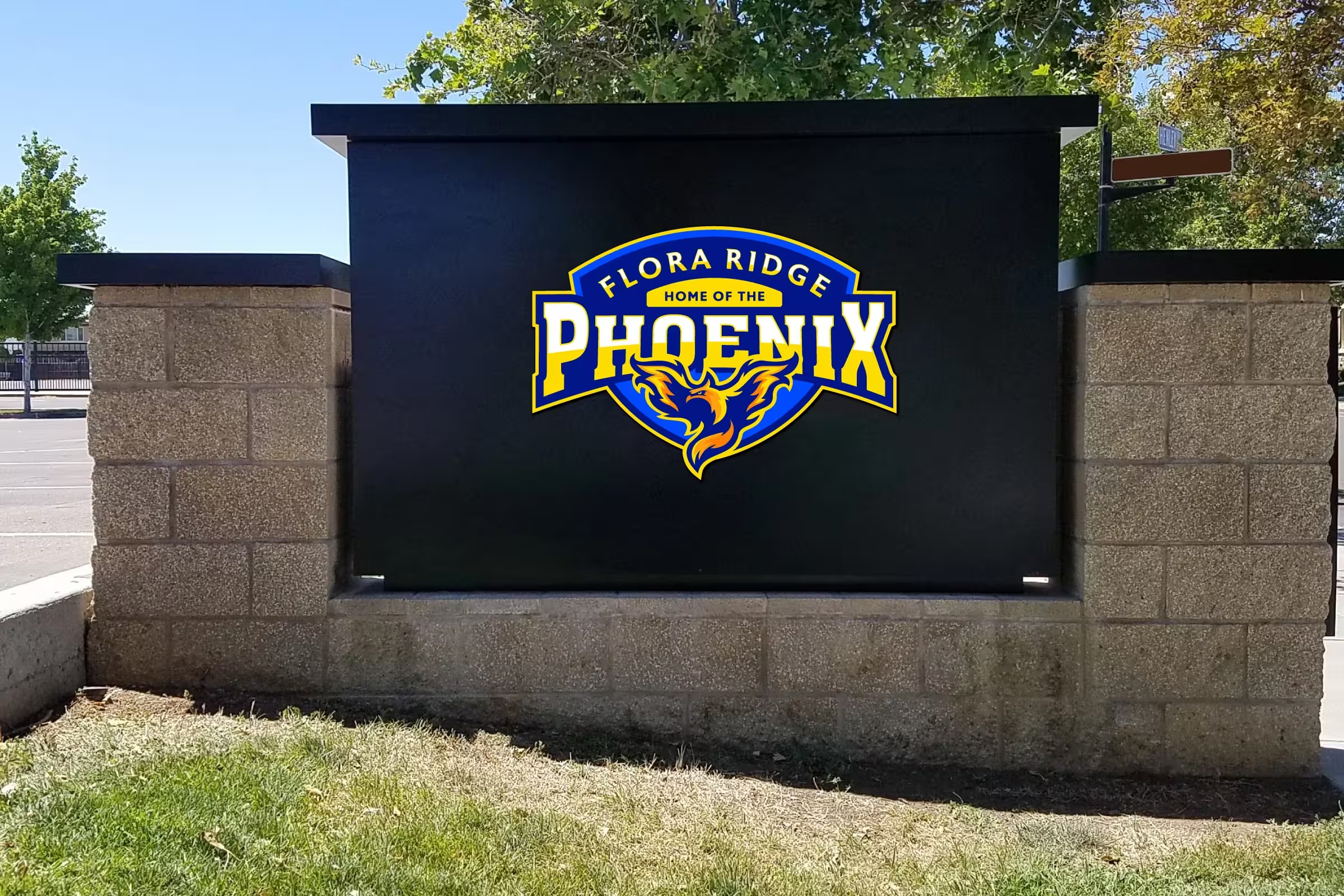
A professional monument sign with a clean logo, maintained landscaping, and visible banners or flags tells a family that this school invests in itself. A faded sign with a logo from the 90s, overgrown hedges, and no branded elements visible from the street tells a family the opposite.
Flora Ridge Elementary is a good example of getting this right. Their campus presence matches their digital presence, and that consistency builds trust at a level most schools underestimate.
The drive-by runs 24/7, 365 days a year. Campus signage is the physical version of every promise your website makes. When the two match, trust compounds. When they don’t, it breaks.
5. The referral conversation
The parent asks a friend: “What do you know about that school?” This is the most powerful touchpoint on the list because it comes from someone they already trust.
If your current families can say something specific (“their STEM program is incredible, my daughter has never been more excited about school”), you win. If they can only offer a vague “it’s fine, we like it,” you lose. The difference between those two responses is almost entirely a branding problem. Families can’t sell what they can’t explain, and they won’t promote a brand they’re not proud of.
Spirit wear that parents actually want to wear, car magnets, social media content worth sharing: these are the tools that turn satisfied families into active recruiters. We wrote a full piece on turning current families into your enrollment engine because this touchpoint is that important.
6. The enrollment materials
The parent requests a brochure or receives an enrollment packet. They open it next to the packet from the school down the road. One has a professionally designed folder with branded inserts, compelling messaging, and strong photography. The other has a photocopied sheet in a plain folder with 3 different logo versions and a stock photo on the cover.
Which school feels like it has its act together?
Brand consistency across materials is one of the strongest trust signals we track. When the enrollment packet matches the website matches the campus signage, families receive a cumulative message of competence. Brand guidelines are how you make that consistency happen without micromanaging every printout.
7. The email response
The parent sends an inquiry. They wait. How long they wait, and what the response looks and sounds like, is the final checkpoint before a human conversation happens.
A response within an hour (or even a branded auto-confirmation within minutes followed by a personal note the same day) signals a school that is organized and eager. A response 3 days later in plain text with no signature, no branding, and no warmth signals the opposite.
The email should be branded. The signature should match. The voice should be warm and specific, not a form letter. The message should include a clear next step: “I’d love to schedule a tour for your family, here are 3 times that work this week.”
This is where brand meets operations, and email systems that handle the acknowledgment automatically buy you the time to write the personal follow-up.
The compound effect
No single moment makes or breaks enrollment on its own. Trust compounds across all 7. A parent who has a good experience at every checkpoint arrives at the tour already leaning toward enrollment. The tour becomes a confirmation, not a sales pitch.
A parent who fails at even one checkpoint either disappears forever or shows up skeptical, and now you’re working from a deficit.
The schools that fill seats without scrambling don’t win by being louder or spending more on ads. They win by making sure the brand works at every touchpoint: website, social media, campus environment, family advocacy, brand guidelines, unified identity.
You don’t have to fix all 7 at once. Start with the one that’s costing you the most families. If you’re not sure which one that is, a brand audit will tell you. Walk through the 7 checkpoints as if you were a parent encountering your school for the first time, and be honest about what you find.
Where to start
More on this topic: How School Branding Influences Parent Choice | The Hidden Cost of an Outdated School Brand | Brand Consistency and Enrollment Impact | School Branding That Drives Enrollment Growth | The Enrollment Calendar | School Photography Strategy
We Build and Manufacture Mascot Costumes
A professionally built mascot costume creates unforgettable moments at games, rallies, and community events.

See Full Details →
Design to Delivery
We manage everything
6-12 Week Delivery
In time for your season
Safety First
Ventilation & visibility
Custom Projects
Professional quality
School Branding Strategy | Enrollment-Focused Planning
Build a school brand that grows enrollment
Get a Strategy Consult →Related
School Branding Strategy | Enrollment-Focused Planning
View detailsRelated
Charter Application Branding - Professional Identity for Authorizer Approval
Professional charter application branding that demonstrates operational readiness to authorizers. Complete brand identity, website, and application materials. Charter-specific packages for charter schools.
View details