School Branding Blog
How Long Does It Take to See Results From a School Rebrand? The Honest Timeline
- Author
- Mash Bonigala · Creative Director
- Published
- April 23, 2026
“How long until we see results?”
Every superintendent, principal, and board member asks this after approving a rebrand. Fair question. The school just committed a significant investment. The community is watching. The clock is ticking.
Most agencies dodge it with something like “you’ll start seeing results within the first year.” That’s technically true and practically useless. You need specifics. What changes first, what takes longer, and what should you be measuring at each stage so you can report progress to your board.
I’ve tracked outcomes across hundreds of school branding projects, and the timeline follows a consistent pattern. Some things move faster than people expect. Others take longer than they hope.
Related: school branding strategy | visual identity design | school marketing design
First 30 days: visibility and energy
If you’ve followed a structured launch plan, the new brand is showing up across campus signage, the website, social media, and printed materials. The community sees the change in real time.
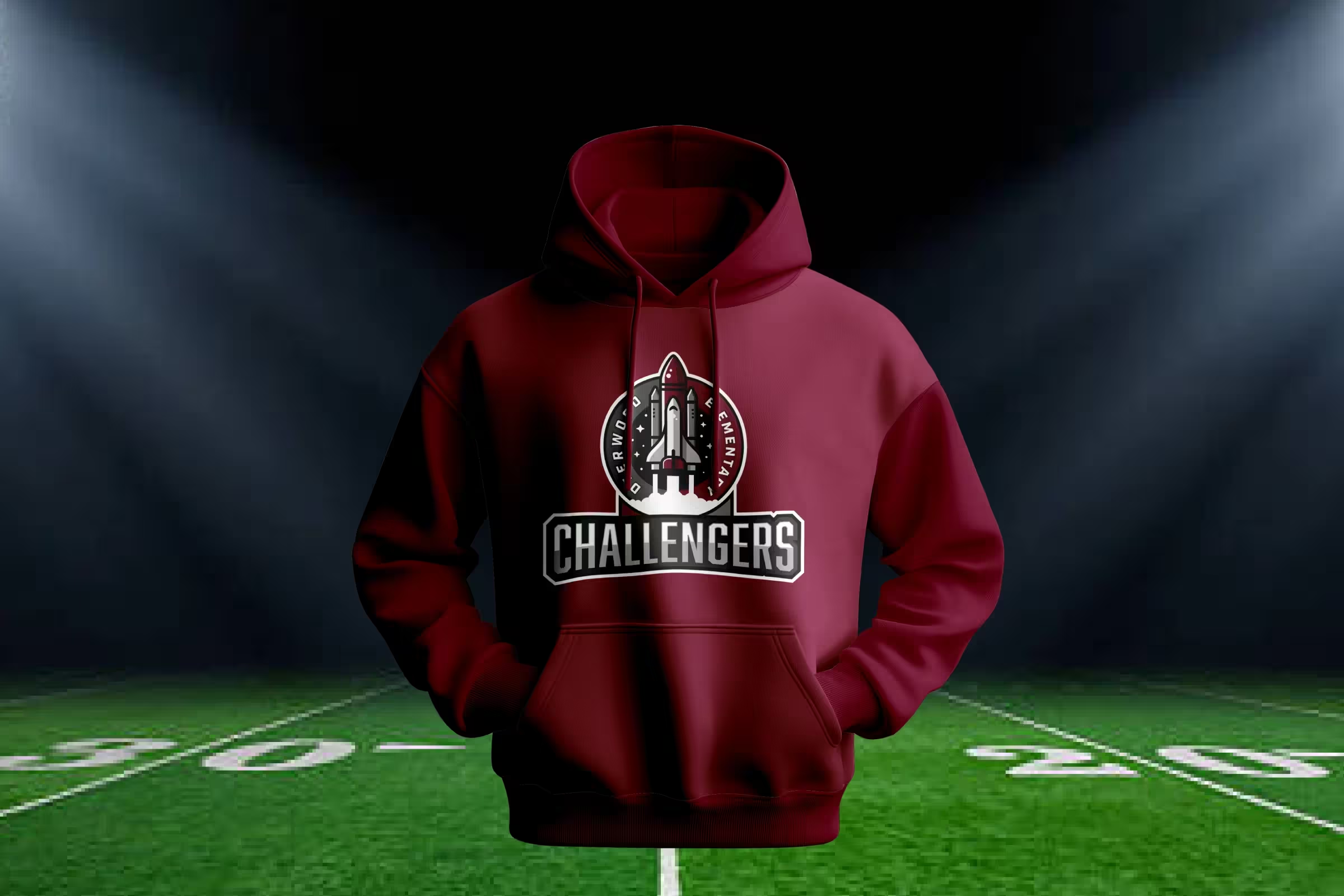
Website traffic jumps as families visit out of curiosity. Social media engagement spikes on posts featuring the new brand, new signage, and reveal event content. Spirit wear sales surge, and it’s common for the first month to outsell the entire previous year. Staff and students respond with energy that wasn’t there before. A well-planned launch generates local media coverage that you couldn’t buy with advertising. Deerwood Elementary launched their Challengers identity with campus signage, branded merchandise, and environmental branding that gave the community something tangible and exciting from day one.
What hasn’t changed yet: enrollment inquiries. The decision cycle is long, and 30 days isn’t enough for brand perception to move enrollment behavior.
What to tell your board at 30 days: our launch reached X families through social media, generated X media impressions, and spirit wear revenue already exceeded our full-year baseline. Website traffic to the enrollment page is up. The infrastructure is in place.
Days 30 to 90: perception shift
The curiosity spike fades and something more valuable takes its place: a sustained shift in how the community sees the school.
Website bounce rate drops as returning visitors spend more time on a site that now looks current. Social media follower growth picks up because the content looks better, so more people follow and share. With brand guidelines in place and staff trained, the visual identity stabilizes across touchpoints, and the trust moments start working in your favor. If you surveyed community perception before the rebrand (and you should have), a follow-up at 90 days typically shows meaningful improvement in “school is moving in the right direction” responses. Alumni resistance follows a predictable arc: loud for a few weeks, quieter by month two, mostly gone by month three.
What hasn’t changed yet: enrollment applications. The families enrolling at the 90-day mark made their decision before or during your rebrand. The families you’re influencing now will show up in the next cycle.
What to tell your board at 90 days: community perception scores improved X points. Digital engagement is up X% over baseline. Brand consistency is holding across touchpoints. Alumni feedback has shifted from resistance to curiosity. We’re on track for enrollment impact in the coming cycle.
Months 3 to 6: behavior changes
This is when perception starts translating into action. Families who formed their first impression of the new brand during the launch are now moving through their decision process.
Enrollment inquiries increase compared to the same period the previous year. This is the first real enrollment signal. Tour requests climb because the brand is converting more of the silent trust checkpoints into active engagement. Open house attendance grows as brand visibility pulls a larger pool of interested families. Teacher recruitment improves as candidates research the school online and find something that looks professional. Current families have absorbed the new brand and can now describe what makes the school different, so their referral conversations become more specific and persuasive.
What hasn’t moved dramatically yet: actual enrollment numbers. Inquiries are up, tours are up, but conversion from interest to enrollment takes time.
What to tell your board at 6 months: enrollment inquiries are up X% year-over-year. Tour requests are up X%. Our open house drew X more families than last year. Teacher applications are up X%. The brand is converting attention into action.
Months 6 to 12: enrollment impact
This is the payoff window. Families influenced by the new brand during the research and evaluation phases are making enrollment decisions.
Enrollment applications increase compared to the prior year. Application-to-enrollment conversion rates improve because families who reach the application stage have already been pre-qualified by a consistent brand experience. Net enrollment growth follows. Revenue impact becomes concrete: at typical per-pupil funding levels, even a modest percentage increase in enrollment can represent significant new annual revenue against the rebrand investment. The ROI calculation stops being theoretical. Spirit wear settles into a sustained revenue stream at well above pre-rebrand levels. Community funding support strengthens as the school’s perceived trajectory improves.
What to tell your board at 12 months: enrollment applications are up X%. Net enrollment grew by X students, representing X in new per-pupil revenue. Spirit wear revenue is X above baseline. Community perception is at its highest recorded level.
Year 2 and beyond: compounding
Year two is where the brand stops being new and starts being the identity. The effects multiply.
Referral-driven enrollment becomes the dominant channel because the brand gave families the tools to recruit for you. Retention improves because students and families feel connected to something cohesive. Marketing spend gets more efficient because organic channels carry more of the load. The return on the original investment keeps growing well beyond the first year. The brand becomes self-reinforcing as consistent application through guidelines, ongoing photography, and sustained social media build recognition that makes each subsequent year stronger.
What makes some schools faster
Schools that follow the first 100 days launch plan see results noticeably faster than schools that treat launch day as the finish line. Schools that update their website and social media on day one capture the curiosity window; schools that wait weeks or months miss it. Schools that time the rebrand to the enrollment calendar (July or August launch) catch the full research-phase audience; a March launch misses the current cycle almost entirely. Schools that involve the community in the process see faster acceptance; schools that surprise the community spend months overcoming resistance.
What slows schools down
Incomplete implementation is the biggest drag. Schools that approve the design but underfund the rollout, leaving old signage up, old materials in circulation, and old logo files with vendors, see delayed results because the brand is only half-applied. Consistency drives results; inconsistency delays them.
A new logo on a website with old photography looks worse than the old brand. Leadership turnover shortly after a rebrand stalls momentum if the new leader doesn’t champion it. Boards that expect enrollment results in 60 days will be disappointed and may pull support, which is one of the common mistakes boards make with branding investments.
The pattern
A school rebrand doesn’t produce instant results, but it produces results faster than most leaders expect when executed properly. The timeline is a cascade: visibility leads to perception change, which leads to behavior change, which leads to enrollment impact, which compounds into sustained growth.
The schools that see the strongest returns aren’t the ones with the best logos. They’re the ones that treat the rebrand as a 12-month initiative, not a design project. They plan the launch. They invest in implementation. They measure at every stage. They give the brand enough time and consistency to do what brands do.
Where to start
- Plan with the first 100 days launch guide
- Build the board case
- See what we’ve done for 250+ schools
- Talk to us
More on this topic: School Branding ROI Calculator | Brand Refresh vs. Full Rebrand | The Hidden Cost of an Outdated School Brand | School Branding That Drives Enrollment Growth | The Enrollment Calendar
We Build and Manufacture Mascot Costumes
A professionally built mascot costume creates unforgettable moments at games, rallies, and community events.

See Full Details →
Design to Delivery
We manage everything
6-12 Week Delivery
In time for your season
Safety First
Ventilation & visibility
Custom Projects
Professional quality
School Branding Strategy | Enrollment-Focused Planning
Build a school brand that grows enrollment
Get a Strategy Consult →Related
School Branding Strategy | Enrollment-Focused Planning
View detailsRelated
Charter Application Branding - Professional Identity for Authorizer Approval
Professional charter application branding that demonstrates operational readiness to authorizers. Complete brand identity, website, and application materials. Charter-specific packages for charter schools.
View details