School Branding Blog
Design to Costume: Why One Vendor Beats Two
- Author
- Mash Bonigala · Creative Director
- Published
- March 21, 2026
- Read
- 8 min

Related: How to Order a Mascot Costume • Why Schools Choose Custom-Manufactured Costumes • Mascot Costume Cost Guide • Mascot Costume Construction Process • Mascot Costume Service
TL;DR
Schools that use separate vendors for mascot design and costume production tend to spend more, wait longer, and frequently end up with costumes that don’t match their logo. A single vendor that handles both eliminates the translation gap, reduces costs, and delivers a costume that is a faithful 3D version of your 2D brand.
The Two-Vendor Problem
Here is how most school mascot projects go wrong before anyone realizes it.
A school hires a graphic designer to create a new mascot logo. The designer produces a sharp, expressive character that looks fantastic on screen and in print. The school loves it. They approve the logo, pay the invoice, and move on to the next step: getting a costume made.
They send the logo files to a costume production company. The costume company opens the files, studies the character, and starts building. Weeks later, the school receives photos of the finished costume and something is off. The colors are close but not right. The head shape is rounder than the logo. The fierce expression that sold the design now reads as vaguely confused. The proportions that looked perfect in 2D feel awkward in 3D.
This is not a rare outcome. It is the predictable result of splitting mascot design and costume production between two vendors who never speak the same language. The graphic designer thinks in pixels, vectors, and screen resolution. The costume builder thinks in foam density, fabric stretch, and head circumference. Without a shared process, something always gets lost between them.
Schools we have worked with describe the same frustrations: the costume “sort of” looks like the logo but lacks the energy. The colors shift depending on the lighting. Details that defined the character on screen were simplified or dropped entirely during construction. The school paid for two separate projects and ended up with a result that satisfies neither.
What Gets Lost in Translation
When a costume builder receives a logo file from a designer they have never worked with, four categories of problems emerge consistently.
Color Drift
The mascot logo was designed in RGB for screens. The costume will be built with dyed fabrics, faux fur, and airbrushed foam. These are fundamentally different color systems. A specific shade of navy blue on a monitor can look like five different blues depending on the fabric type, dye lot, and lighting conditions.
Professional color management requires Pantone specifications that bridge the gap between digital design and physical materials. But when a graphic designer hands off files to a costume company, Pantone specs are often missing, approximated, or ignored. The costume builder picks the closest available fabric color and moves forward. The result is a costume that is “close enough” to the logo but visibly different when placed side by side, especially under gymnasium lighting or outdoor sunlight.
Proportion Changes
A 2D mascot logo does not automatically translate into a 3D costume. The head-to-body ratio that looks dynamic in a logo may look cartoonishly oversized or disappointingly small on a human body. Limb length, torso width, and feature placement all shift when a flat design wraps around a living performer.
Graphic designers rarely account for these changes because they are not thinking about construction. They design for visual impact on a page or screen. The costume builder then has to make judgment calls about how to interpret the design in three dimensions, and those calls are made without input from the person who created the character.
Character Personality
This is the most common and hardest-to-fix problem. A mascot’s personality lives in subtle details: the angle of the eyebrows, the curve of the mouth, the tilt of the head. When a sculptor or foam carver recreates these details without understanding the designer’s intent, the character changes.
A fierce eagle becomes generically aggressive. A friendly bear becomes cartoonishly goofy. A dignified lion loses its gravitas and looks like a stuffed animal. The personality shift happens because the builder is interpreting a flat image rather than executing a shared vision. They are skilled craftspeople working from incomplete information.
Material Disconnect
Graphic designers envision textures, finishes, and surface qualities that may not exist in costume-grade materials. A logo might feature sleek, smooth fur with metallic accents and sharp geometric details. In reality, faux fur has a nap direction that changes how colors read. Metallic fabrics behave differently than metallic ink. Sharp angles soften when built from foam and fabric.
When the designer and the builder have never collaborated, these material realities surface late in the process, forcing compromises that erode the design’s original impact.
The Cost of Splitting the Work
Beyond the quality issues, the two-vendor approach costs more in measurable ways.
Two separate design fees. You pay the graphic designer for the logo and then pay the costume company for their own design interpretation, pattern development, and rendering. The costume company charges for the translation work that would not exist if they had been involved from the start.
Revision rounds between three parties. When the costume rendering does not match the logo, the school becomes the middleman between the designer and the builder. You relay feedback from one to the other, waiting for each side to respond. Each revision cycle adds days or weeks.
Timeline delays from miscommunication. The graphic designer delivers files in formats the costume builder does not use. Color specs are missing or ambiguous. Design details are open to interpretation. Each gap requires a conversation, a clarification, and a decision that could have been avoided.
Rework costs when the costume does not match. If the finished costume diverges significantly from the approved logo, someone has to pay for corrections. Repainting a head, replacing fabric panels, or resculpting features adds hundreds or thousands of dollars to a project that was already over budget.
The total premium adds up quickly compared to a bundled approach. That is not a theoretical estimate. It reflects the additional design fees, extended timelines, revision rounds, and rework that schools consistently experience when they split the work.
What One Vendor Looks Like
When the same team designs the mascot logo and manages costume production, the entire process changes.
Design decisions account for 3D construction from day one. The designer knows the character will become a costume, so they make choices that work in both formats. Proportions are designed to translate. Colors are specified in systems that carry through to fabric. Details are included or excluded based on what is actually buildable.
Color specs carry through from concept to fabric. Pantone values are assigned during the design phase and referenced throughout production. The costume builder receives exact specifications rather than a logo file and best wishes.
3D rendering happens before production starts. The school sees a digital 3D model of the costume alongside the approved logo. What you approve is what gets built. There are no surprises at delivery because the translation happened in software, not in a workshop.
One point of contact manages the entire process. You are not relaying messages between a designer and a builder. One team owns the timeline, the specifications, and the outcome. Questions get answered immediately because the people who designed the character are the same people directing its construction.
One accountability. If something does not match, there is no finger-pointing between vendors. The team that designed it is responsible for the finished product matching the approved design.
Design Decisions That Only Work When You Think 3D From Day One
Certain design choices can only be made well when the designer understands costume construction. These are decisions that a graphic designer working in isolation will never consider.
Eye placement for performer visibility. The character’s eyes need to function as the performer’s sight lines. A designer who understands construction places the eyes where they create both an expressive character and a safe performer experience. A designer who does not think about construction places the eyes where they look best on paper, and the costume builder has to figure out visibility later.
Head weight distribution. A mascot head that looks balanced in a logo can be front-heavy or lopsided as a physical object. Designers who understand foam carving and structural support create characters whose visual weight matches their physical weight, so performers can wear them comfortably for hours.
Fur pattern breaks for seams. Every costume has seams where fabric panels meet. A designer who knows construction plans the character’s color breaks, stripes, and patterns to align with natural seam locations. A designer who does not think about seams creates patterns that force awkward cuts through the middle of design elements.
Jaw articulation. If the character’s mouth is designed to move, the hinge point, range of motion, and visual integration must be planned during the design phase. Retrofitting a moving jaw into a design that was not built for one produces clunky, unnatural movement.
Shoe and glove integration. The character’s hands and feet need to look like part of the character while functioning as wearable accessories. Designers who think in 3D create extremities that integrate with the costume. Designers who think in 2D create hands and feet that work as illustrations but fight the realities of human anatomy.
The School’s Experience: One Vendor vs. Two
Two Vendors
- Hire a graphic designer. Wait 4-6 weeks for logo concepts, revisions, and final delivery.
- Send the approved logo to a costume production company. They review the files and begin their own interpretation.
- Receive a costume rendering from the builder. It does not quite look right. Send feedback.
- Go back to the graphic designer for adjustments to the source files. Wait 2-3 more weeks.
- Send revised files to the costume company. Wait for a new rendering.
- Approve the rendering. Production takes 6-12 weeks.
- Total: 16-25 weeks. Higher cost. Compromised result.
One Vendor
- Discovery call. Design begins with the costume in mind from the first sketch.
- Logo concepts are presented. You pick a direction.
- The approved logo and a 3D costume rendering are developed simultaneously. You see exactly what the costume will look like before production begins.
- Approve. Production takes 6-12 weeks.
- Total: 10-18 weeks. Lower cost. Faithful result.
The difference is not just faster and cheaper. It is a fundamentally different experience. You make decisions once instead of twice. You approve a unified vision instead of hoping two separate vendors arrive at the same place. You receive a costume that is a direct, faithful extension of the logo your community already knows.
Questions to Ask Any Vendor
Whether you are evaluating a single-vendor approach or considering separate providers, these questions will reveal how your project will actually unfold.
Do you design the mascot logo, or do you only build from an existing design? If they only build, you will need a separate designer, and the translation gap becomes your problem to manage.
Can I see a 3D rendering before production starts? If the answer is no, you are approving a concept and hoping the execution matches. A 3D rendering eliminates guesswork.
Who manages the relationship with the builder? If you are expected to relay information between your designer and the production team, you are absorbing project management costs with your own time.
What happens if the costume does not match the approved design? Get this in writing. Understand who pays for corrections and how “match” is defined.
Are design revisions included in the price? Separate vendors often charge per revision round. When the designer and builder are the same team, revisions are part of the process rather than a billable surprise.
The Bottom Line
Splitting mascot design and costume production between two vendors introduces risk at every handoff point. Colors drift. Proportions shift. Personality fades. Timelines stretch. Costs climb. And the school ends up managing a process that should be seamless.
A single vendor that handles both design and production eliminates the translation gap entirely. The character is designed to become a costume. The costume is built by the team that designed it. The result matches the vision because there was never a point where the vision had to be reinterpreted by a stranger.
At School Branding Agency, we design your mascot and manage costume production as one seamless process. Your logo and costume are born from the same vision. Learn more about our mascot costume service.
We Build and Manufacture Mascot Costumes
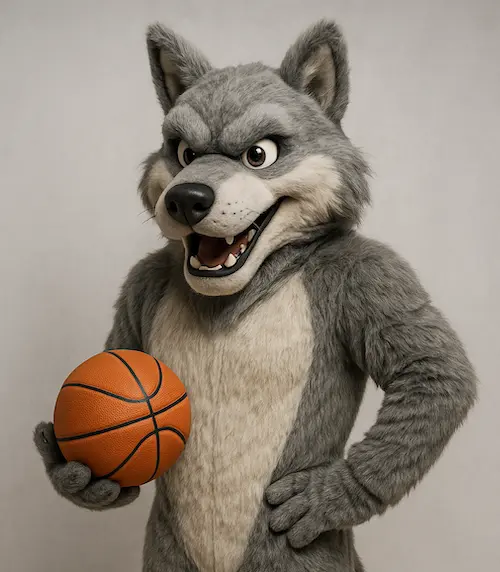
A professionally built mascot costume creates unforgettable moments at games, rallies, and community events.
See Full Details →
Design to Delivery
We manage everything
6-12 Week Delivery
In time for your season
Safety First
Ventilation & visibility
Custom Projects
Professional quality
Custom School Mascot Costume
Bring your mascot to life for game day
Custom school mascot costumes designed for visibility, comfort, and durability. We design, prototype, and manage production so your performer can move, engage, and win crowds.
Get Costume Pricing →Related
Custom School Mascot Costume
Custom school mascot costumes designed for visibility, comfort, and durability. We design, prototype, and manage production so your performer can move, engage, and win crowds.
View detailsRelated
Charter Application Branding - Professional Identity for Authorizer Approval
Professional charter application branding that demonstrates operational readiness to authorizers. Complete brand identity, website, and application materials. Charter-specific packages for charter schools.
View details